Budget and Cost Setup
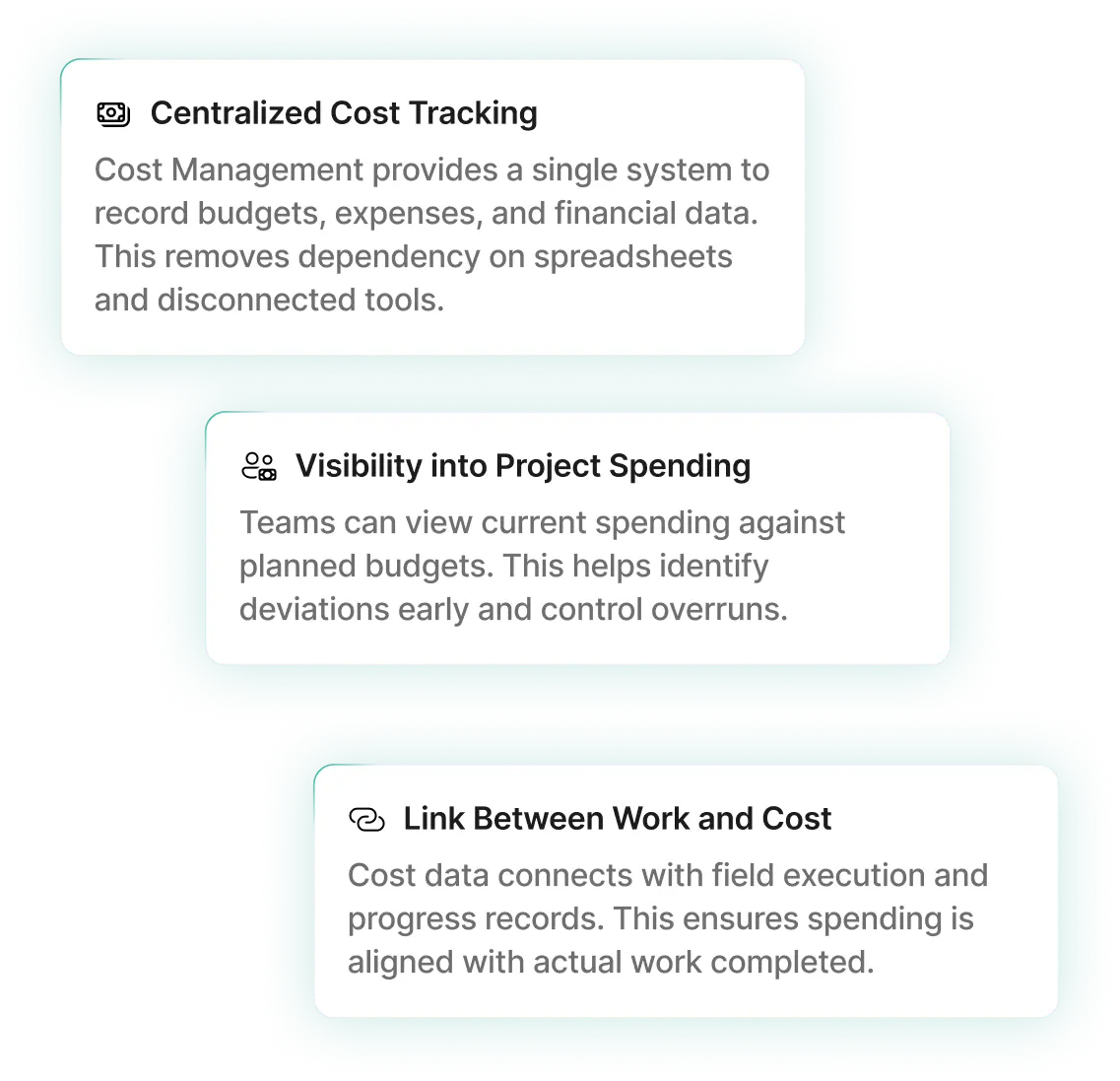
Define and manage project budgets and cost structures.
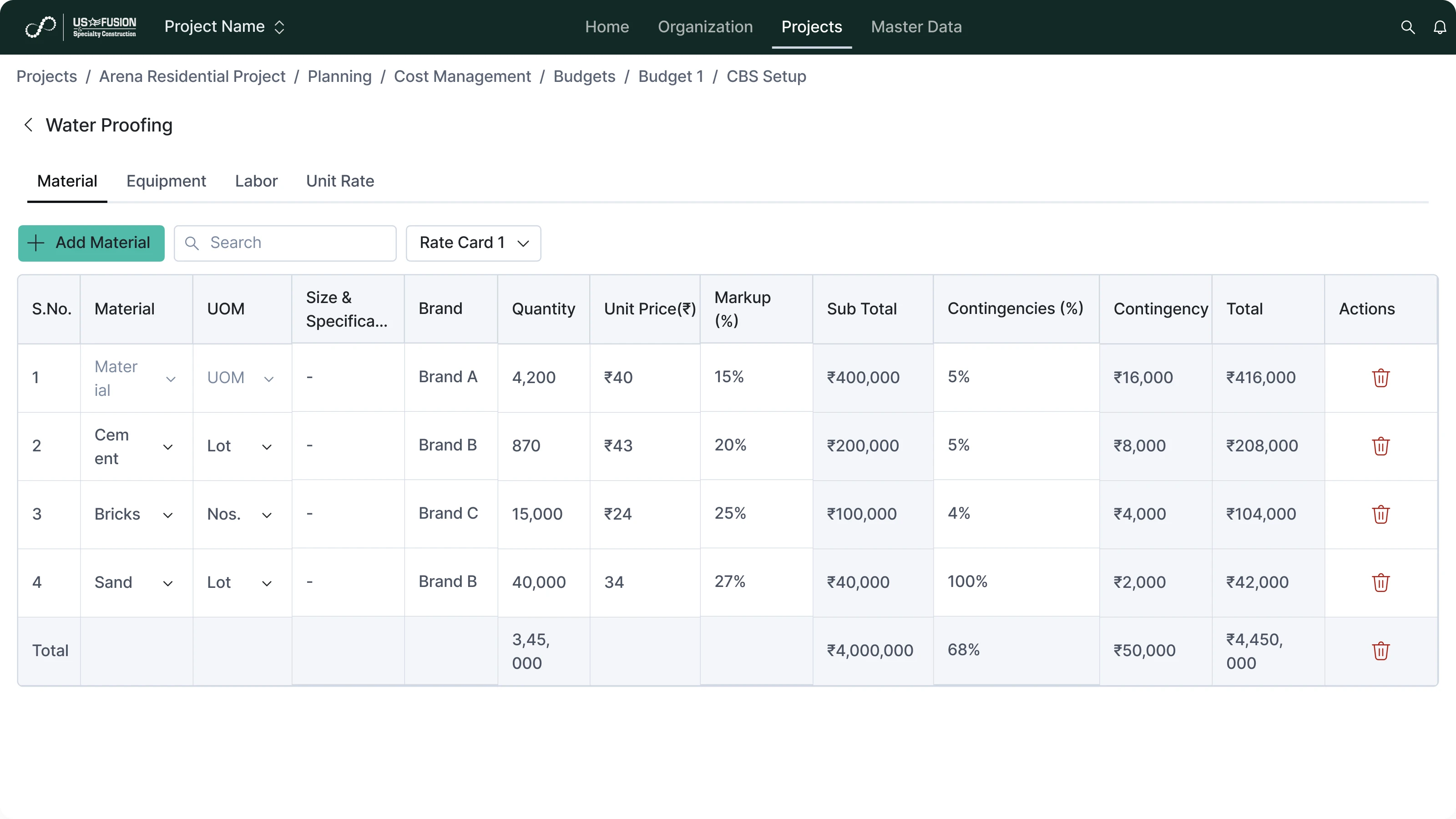
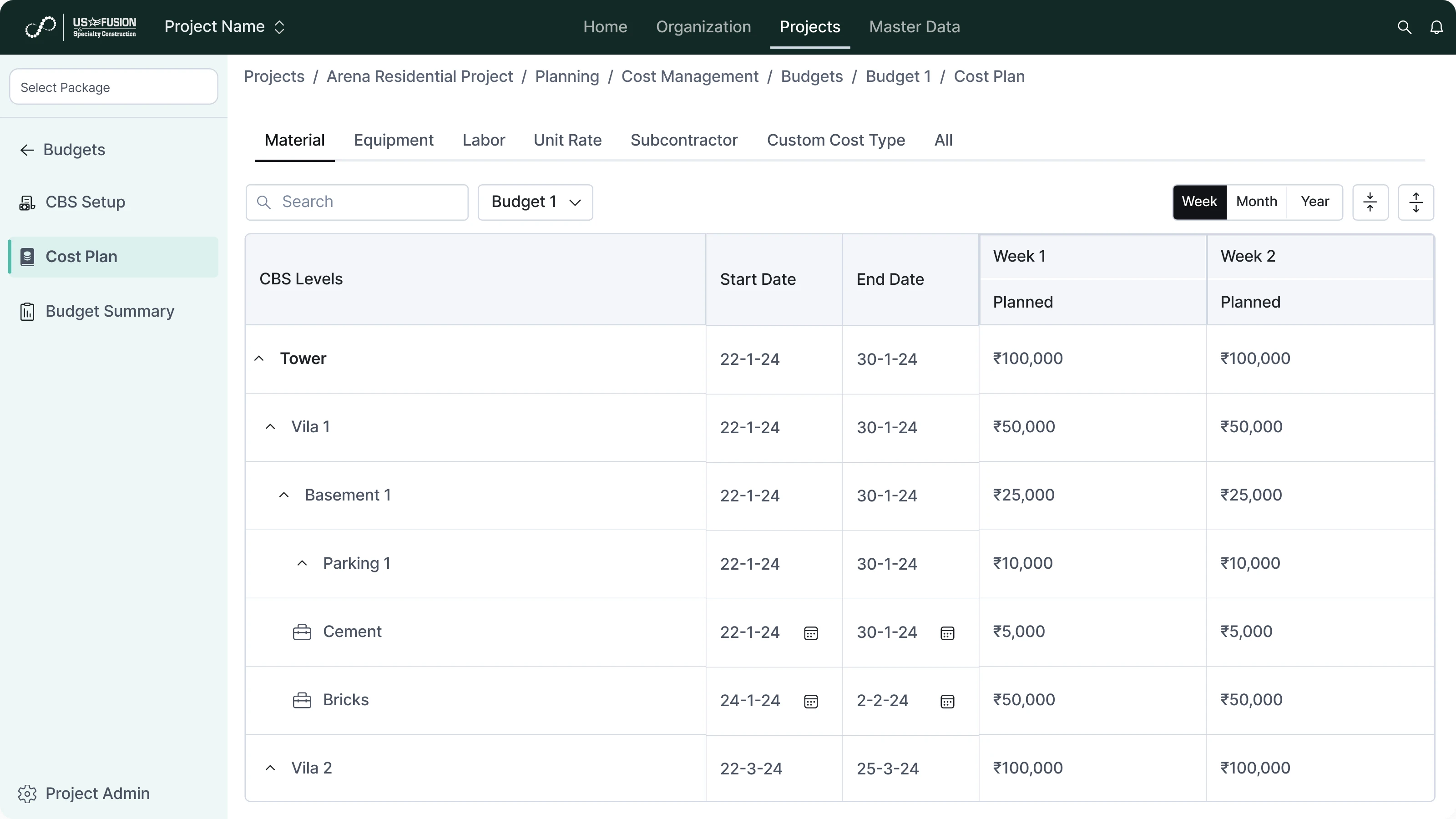
Create project budgets and cost categories
Set up budget heads and cost classifications for different project components. This provides a structured financial framework.
Define planned cost values
Assign planned amounts to each cost category. This establishes baseline financial expectations.
Organize costs by project and phase
Group costs based on project stages or work packages. This supports better financial control.
Maintain standardized cost structures
Use consistent cost definitions across projects. This improves reporting and comparison.

Expense and Invoice Management
Record and manage actual project expenses and invoices.
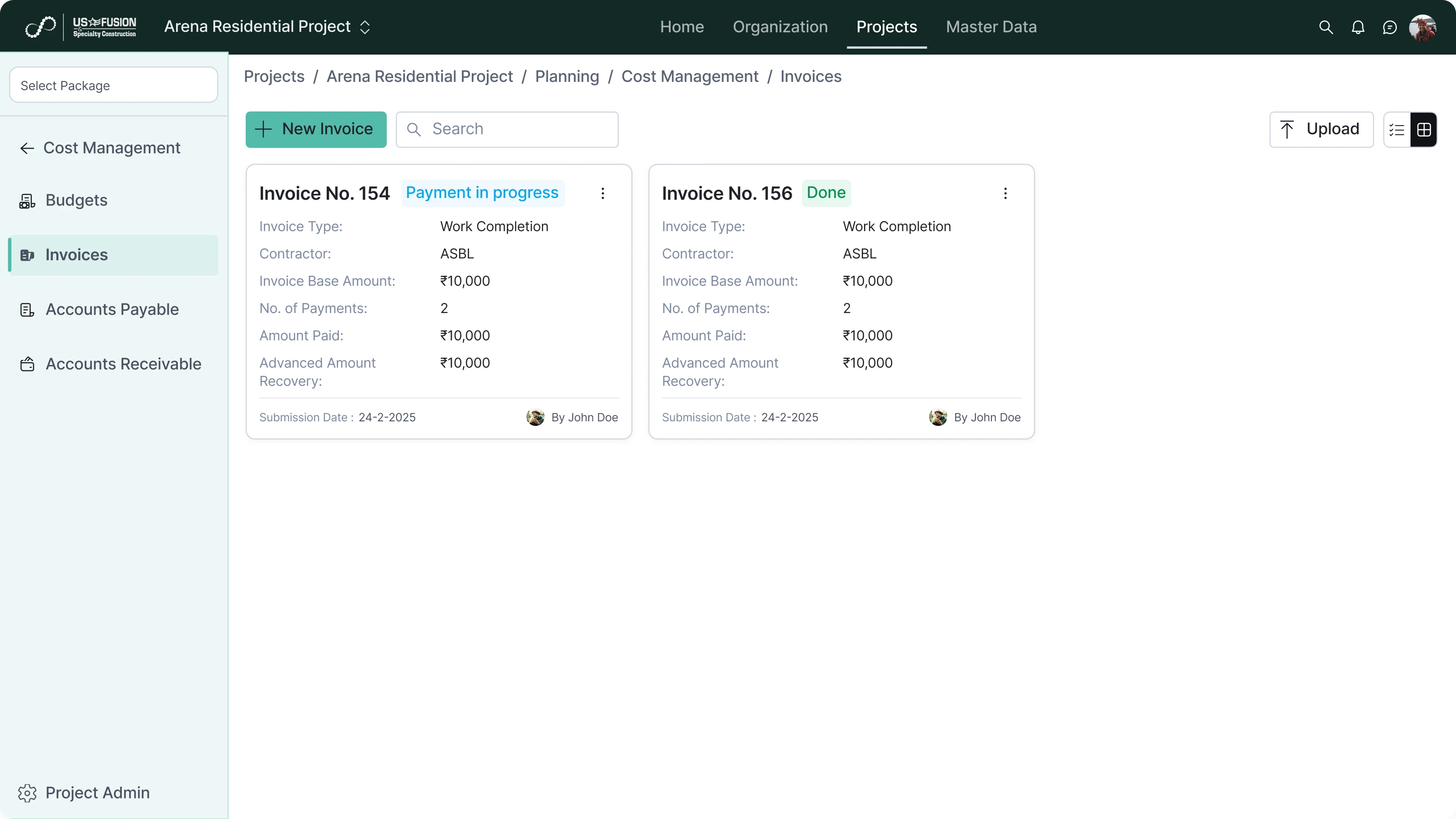
Capture expense and invoice records
Log vendor invoices and site expenses in the system. This creates a complete expense history.
Track approval and payment status
Monitor invoices through review and payment stages. This improves financial process control.
Link expenses to cost categories
Associate each expense with its corresponding budget head. This ensures accurate cost allocation.
Maintain audit-ready financial records
Store all expense data with supporting documents. This supports audits and compliance.
Planned vs Actual Cost Analysis
Compare planned budgets with actual spending.
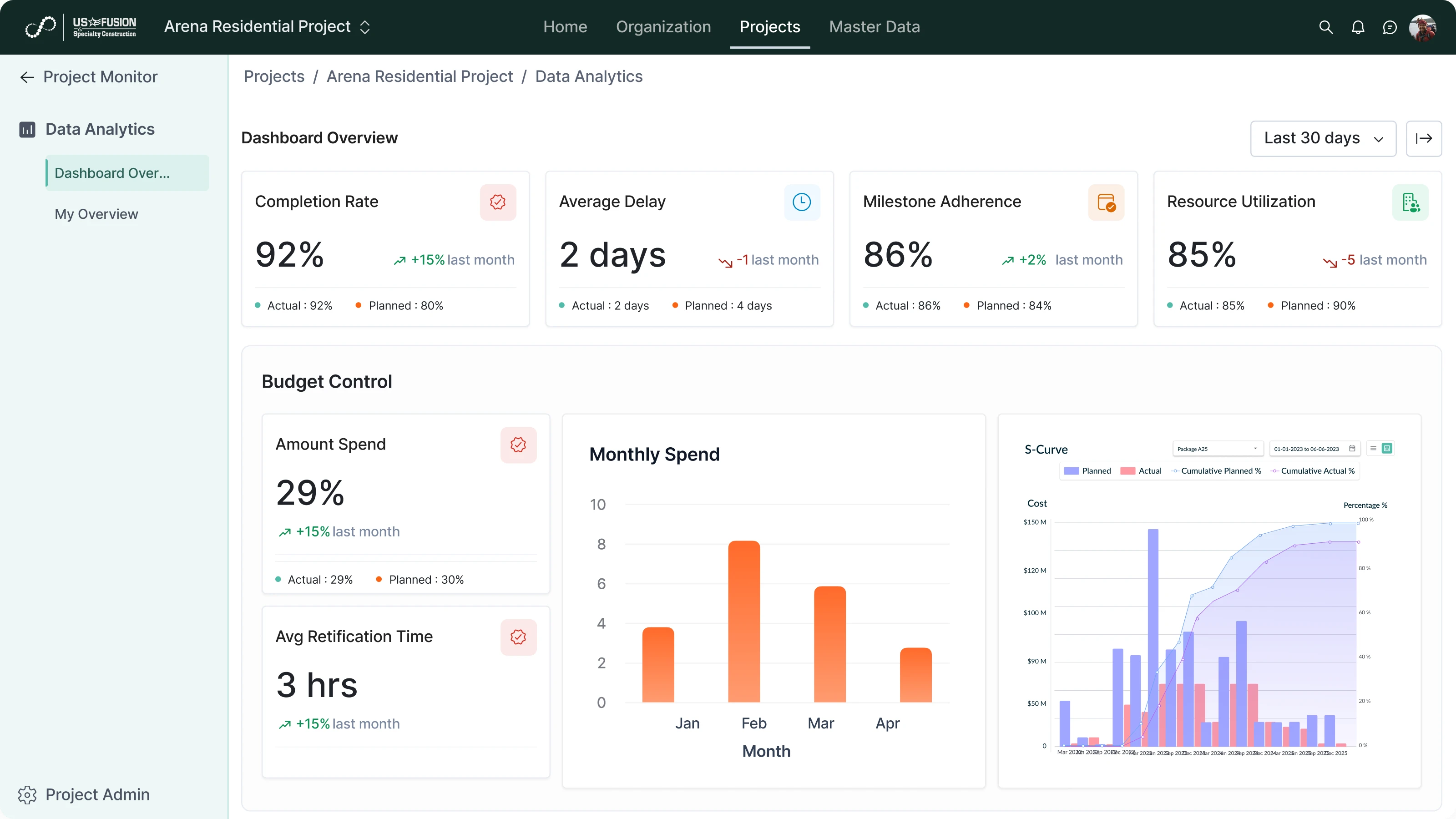
Track budget versus actual costs
View differences between planned and incurred costs. This highlights overruns and savings.
Identify cost variances
Automatically calculate deviations from budgeted values. This supports early corrective action.
Analyze cost trends over time
Review how spending changes across project phases. This helps forecast final project cost.
Support financial decision-making
Provide clear cost insights for management reviews. This enables informed financial control.
Integration and Reporting
Connect cost data with field execution and analytics systems.
Link cost records with field works data
Associate costs with site progress and activities. This provides operational context to spending.
Feed cost data into reports and dashboards
Use financial information for analytics and performance monitoring. This improves visibility.
Enable cross-module data consistency
Share cost records across related modules through connected services. This ensures a single source of truth.
Support portfolio-level cost analysis
Aggregate cost data across projects. This enables enterprise-level financial oversight.