Opportunity Capture and Setup
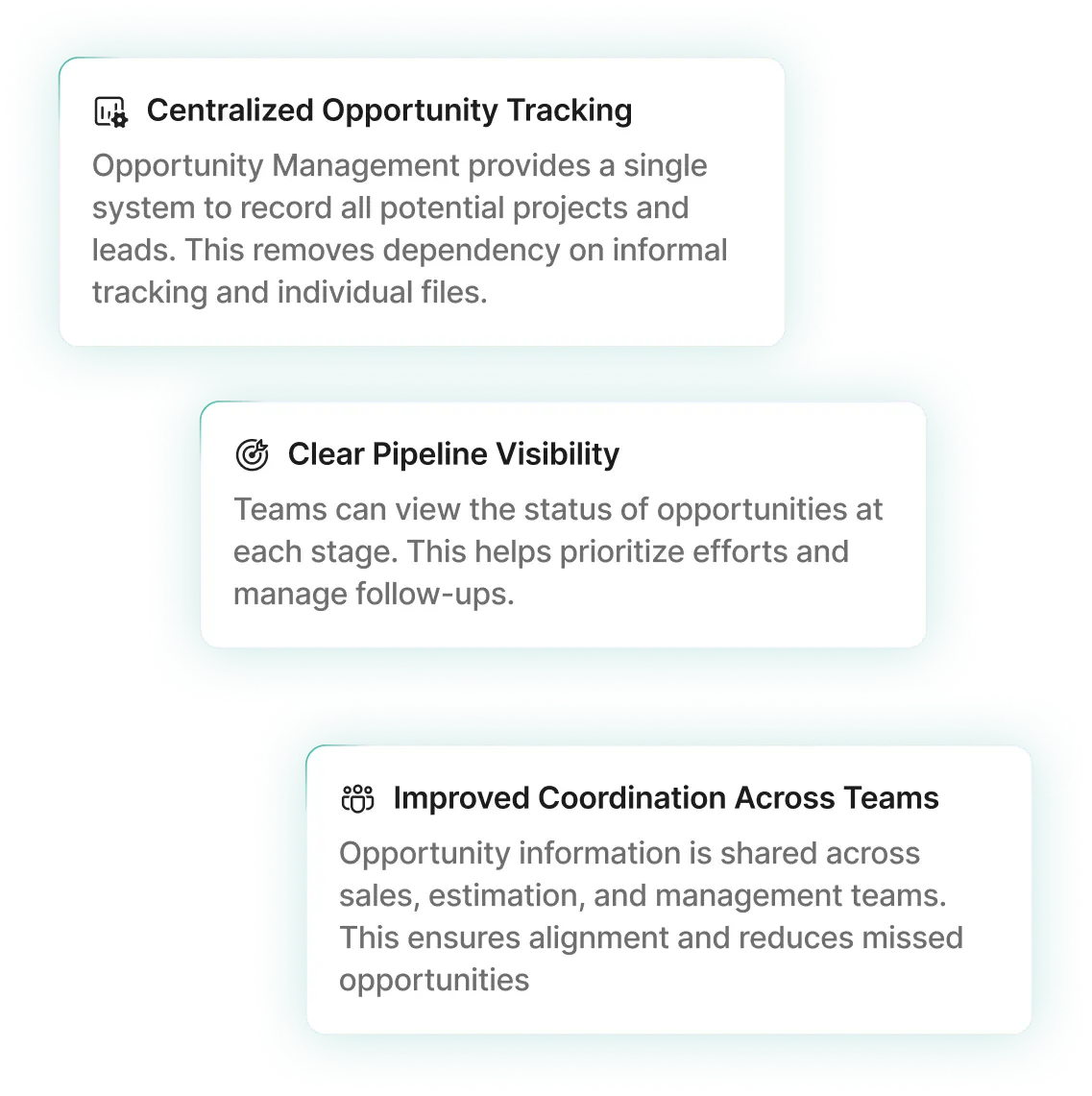
Create and manage structured opportunity records.
Create opportunity records
Capture opportunity details such as client, scope, and estimated value. This creates a formal opportunity database.
Assign ownership and responsibility
Define owners for each opportunity. This ensures accountability for follow-ups.
Categorize opportunities by type or stage
Classify opportunities based on business criteria. This supports better organization and tracking.
Maintain opportunity history
Store notes and updates over time. This provides context for decision-making.

Pipeline and Status Management
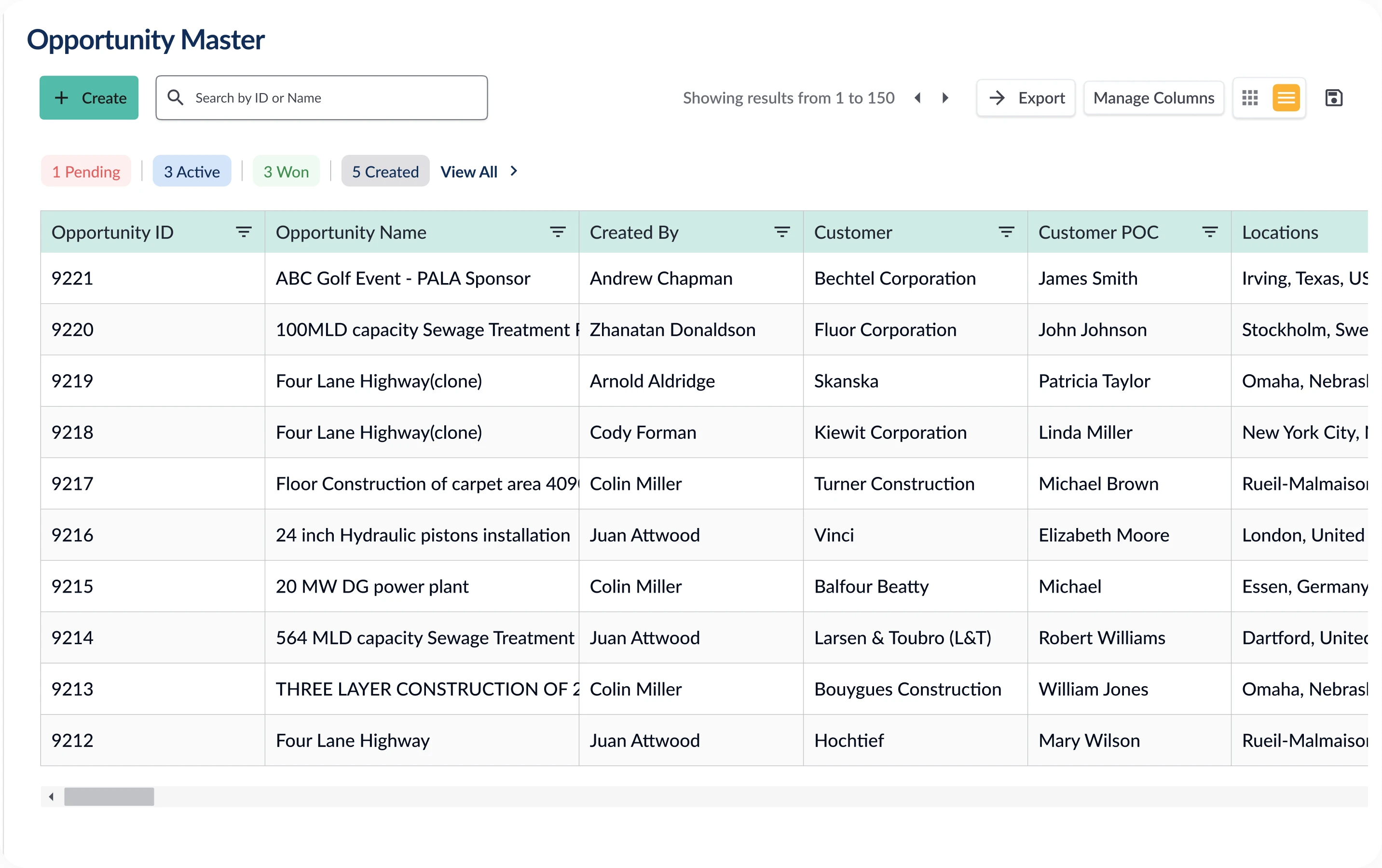
Track opportunity progress through defined pipeline stages.
Define opportunity stages
Set up stages such as lead, qualified, and submitted. This standardizes pipeline flow.
Track current opportunity status
View where each opportunity stands in the pipeline. This improves visibility.
Monitor follow-up activities
Record interactions and next steps. This ensures timely action.
Identify stalled opportunities
Highlight opportunities with no recent updates. This helps teams re-engage or close out.
Collaboration and Handover
Share opportunity data across related teams and processes.
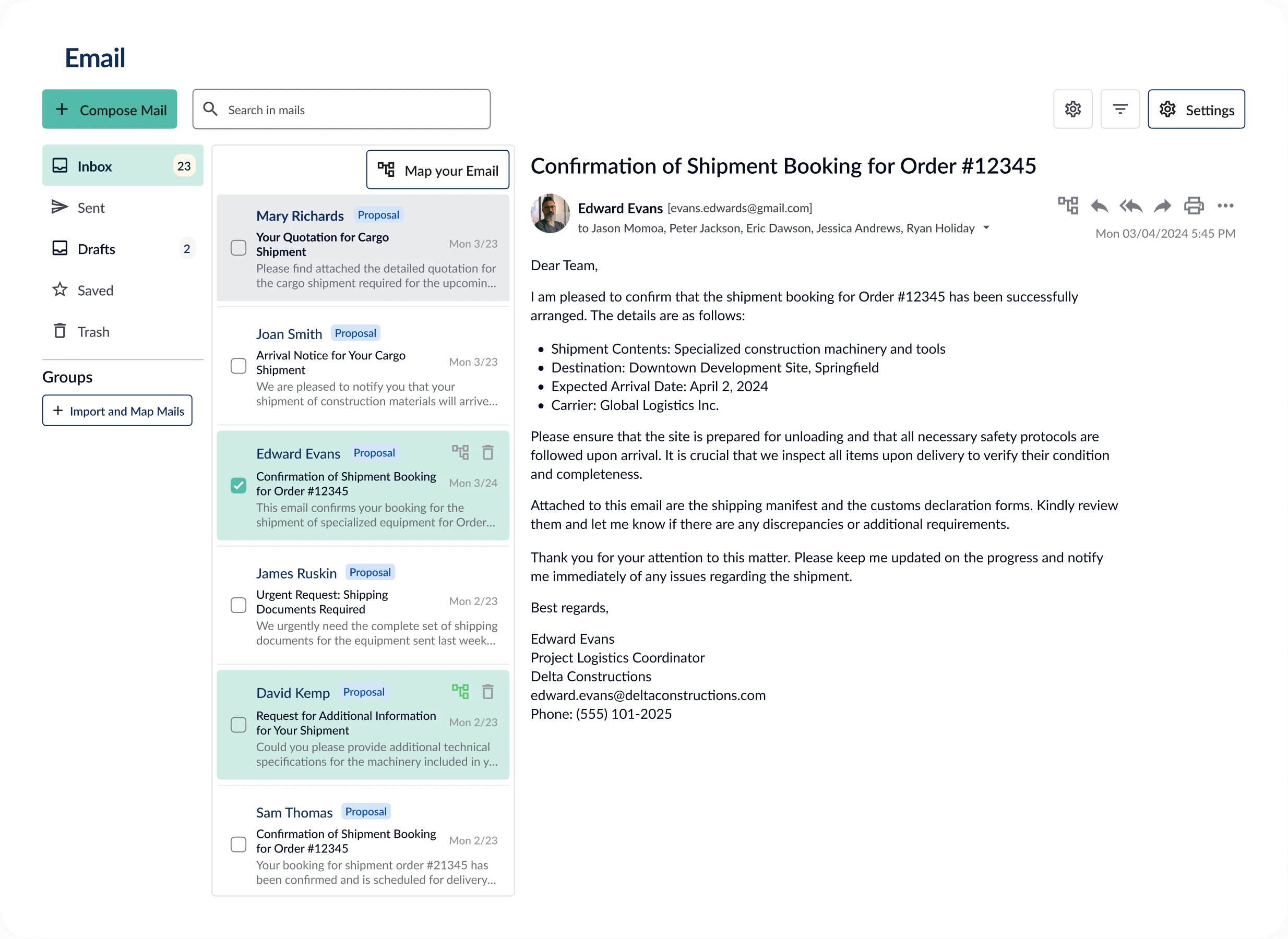
Share opportunity information with bidding teams
Pass opportunity details to bid and proposal workflows. This ensures smooth handover.
Maintain common data across modules
Reuse opportunity data in related processes. This reduces duplication.
Track decision points and approvals
Record key decisions taken during opportunity evaluation. This supports transparency.
Maintain audit trail of changes
Store history of updates and ownership changes. This supports governance.
Reporting and Visibility
Analyze opportunity data and pipeline performance.
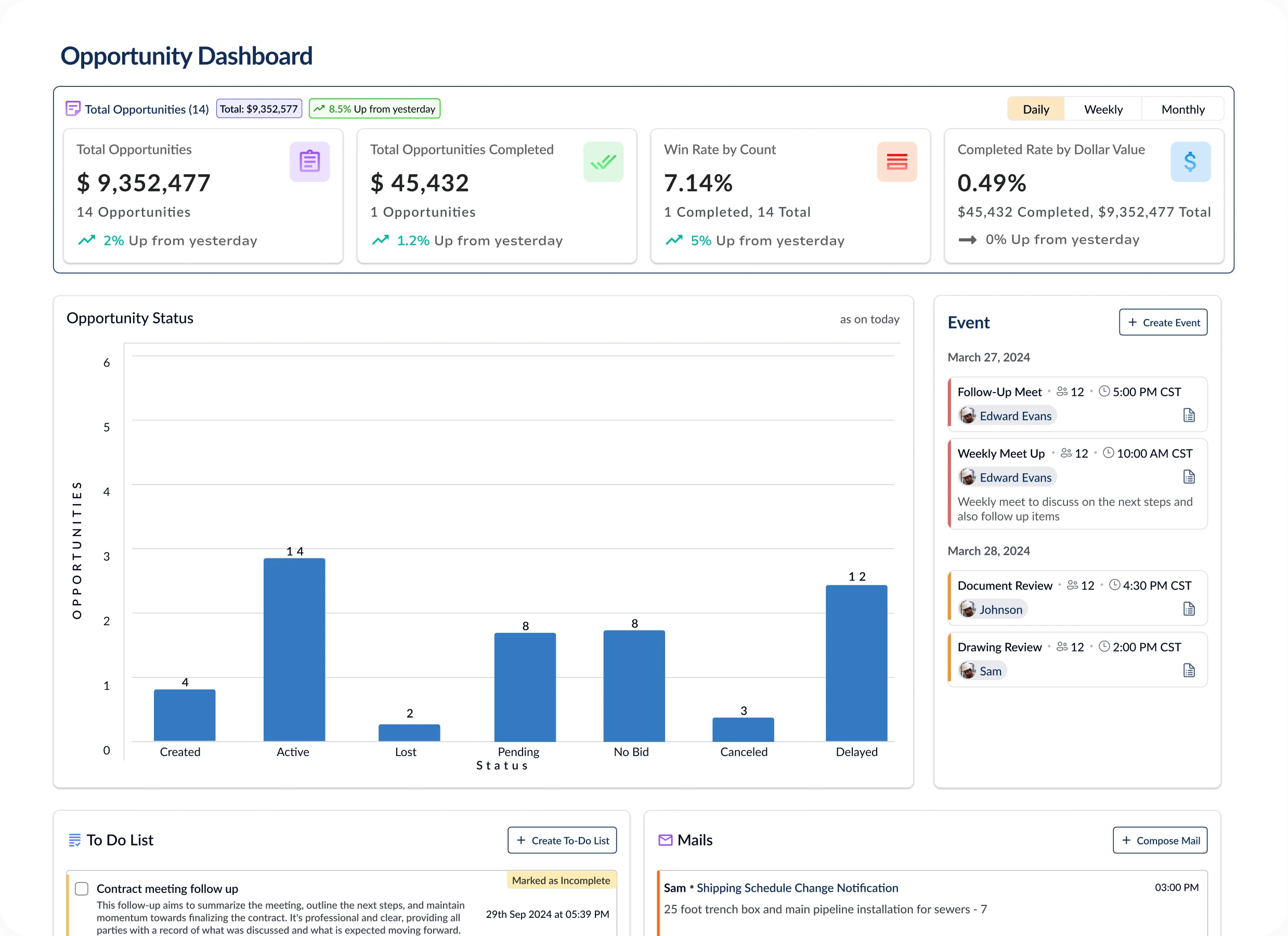
View pipeline summary reports
See total opportunities by stage and value. This supports planning.
Track conversion and win rates
Analyze how opportunities move through the pipeline. This helps improve performance.
Identify trends and gaps
Review historical data to spot recurring issues. This supports process improvement.
Support management reviews
Provide structured reports for leadership discussions. This enables data-driven decisions.