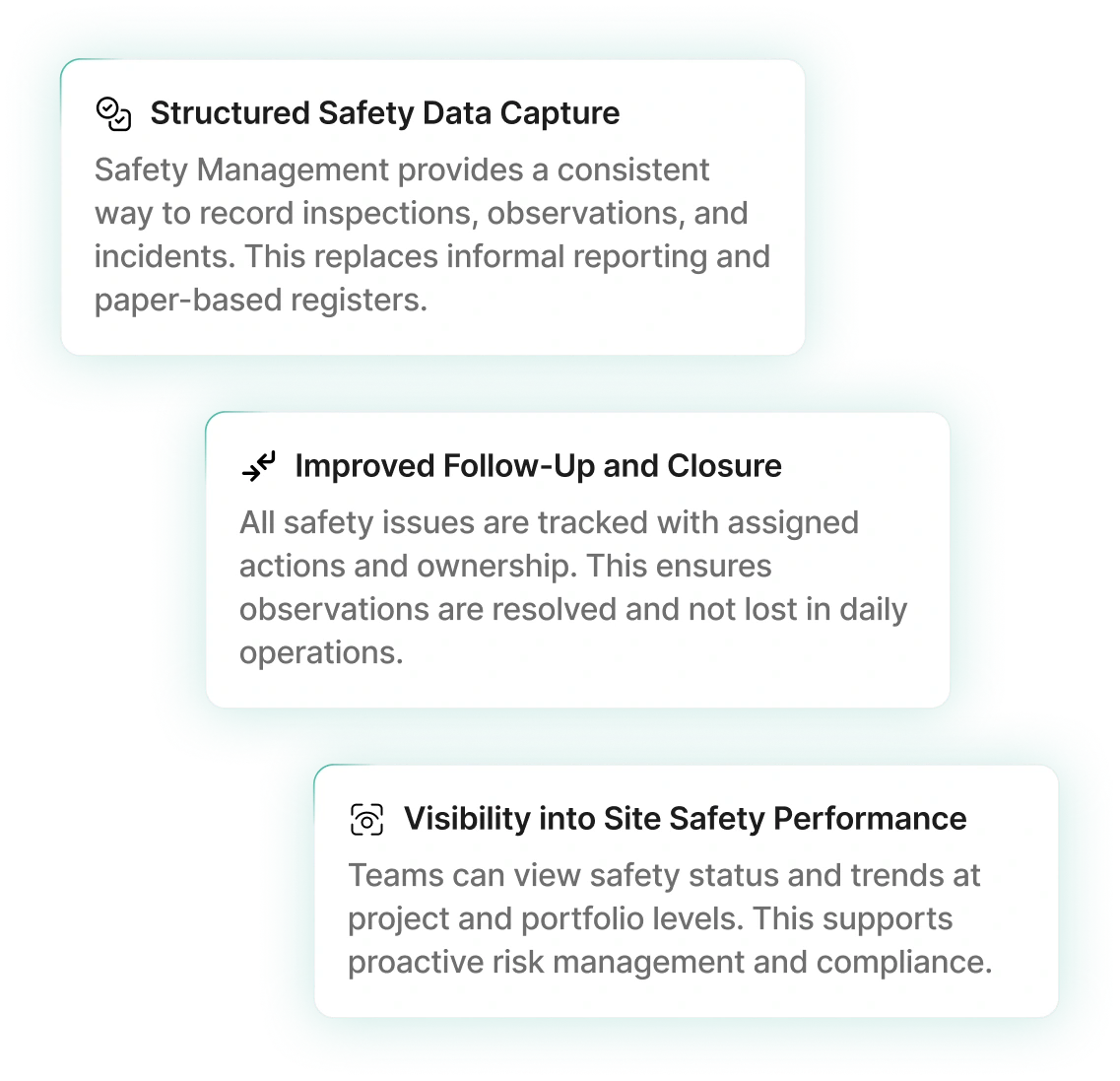
Safety Inspections and Checklists
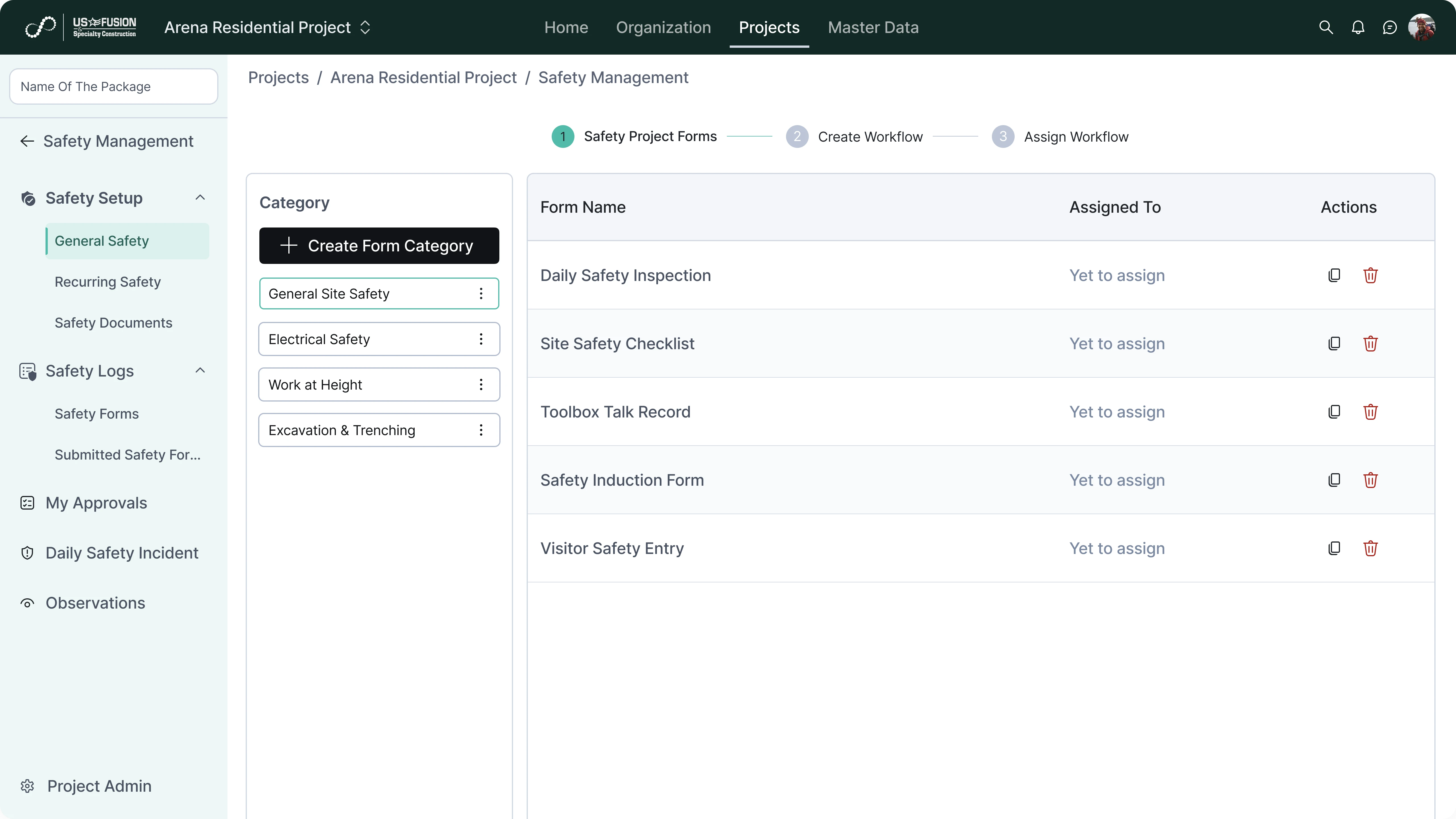
Conduct and manage safety inspections using structured digital checklists.
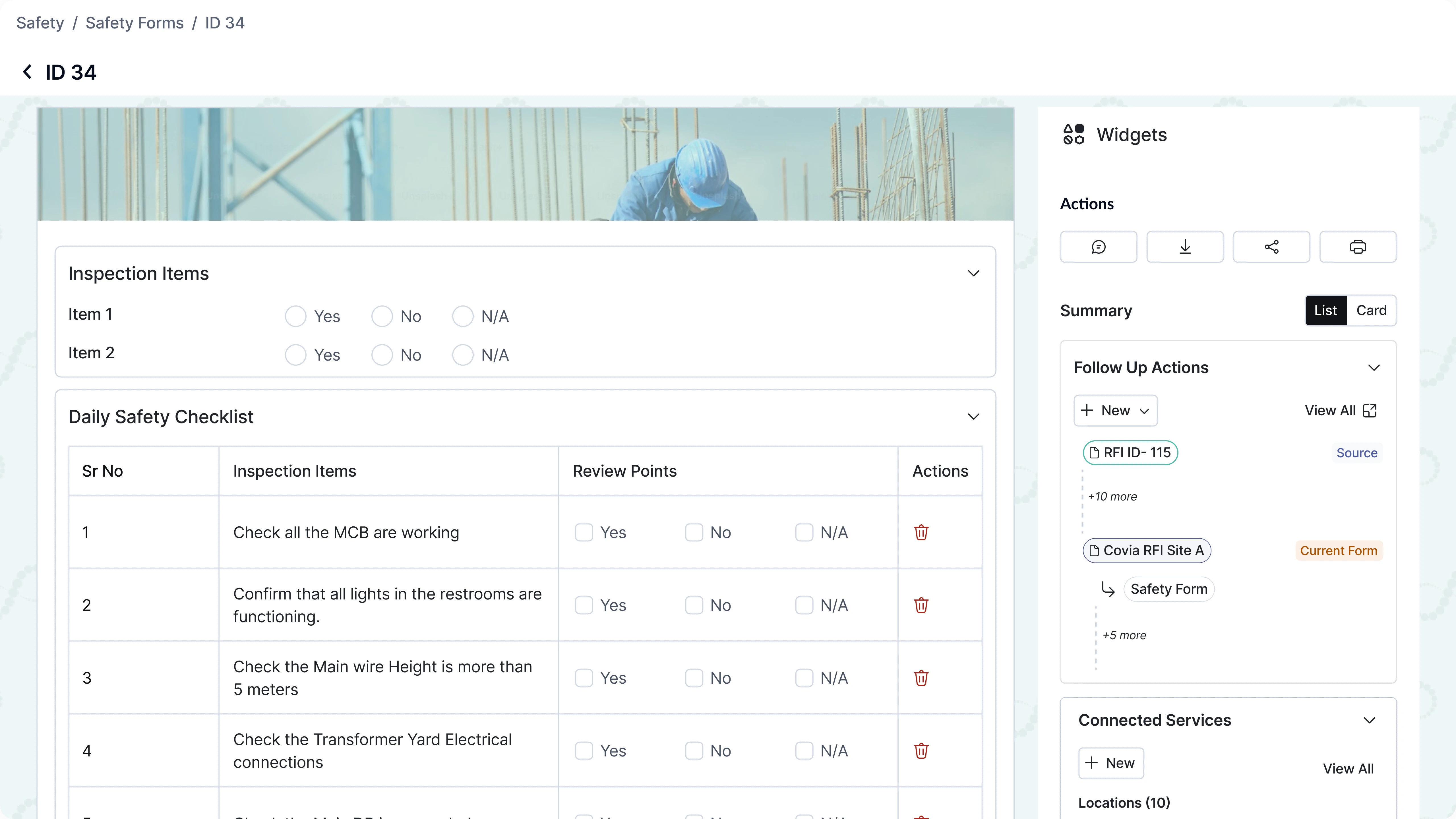
Create and use safety inspection forms
Configure standard safety checklists for different site activities and zones. This ensures consistent inspection practices.
Record inspection results digitally
Capture findings directly from site using mobile or web tools. This removes dependency on paper-based reporting.
Attach photos and supporting evidence
Upload images and documents with inspection records. This provides visual proof of site conditions.
Track inspection completion status
Monitor submitted and pending inspections. This helps ensure regular safety checks are performed.

Incident and Observation Management
Identify, record, and track safety incidents and observations to closure.
Log safety incidents and near-misses
Record accidents, unsafe conditions, and near-miss events with full details. This supports root cause analysis.
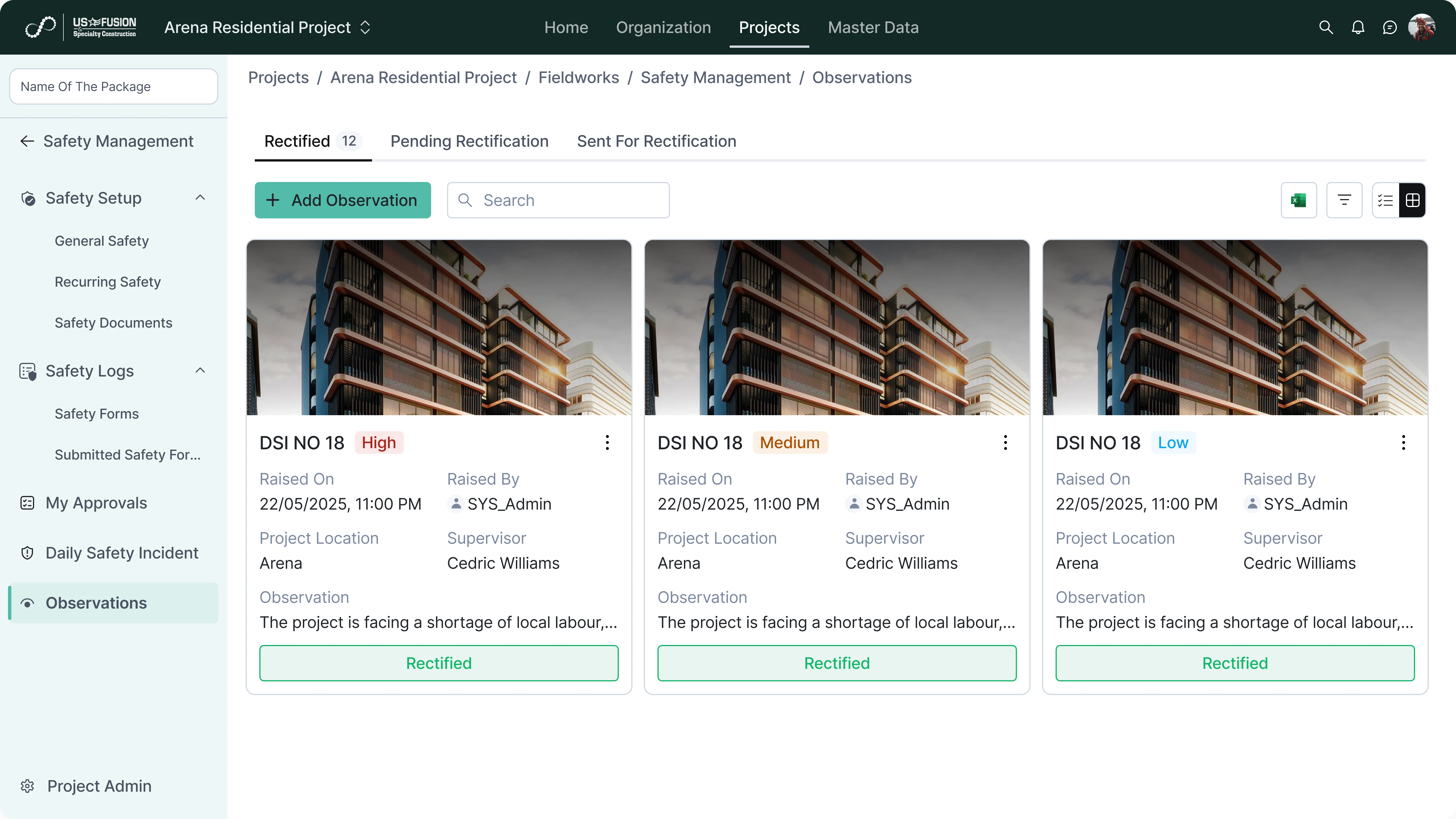
Capture safety observations from site teams
Allow workers to report unsafe practices or hazards. This encourages proactive safety reporting.
Assign corrective actions
Define actions and responsible users for each incident or observation. This ensures accountability.
Track issue status and resolution
Monitor open, in-progress, and closed safety items. This keeps teams focused on closure.
Compliance and Audit Management
Maintain safety records for regulatory compliance and audits.
Maintain complete safety documentation
Store inspection reports, incident logs, and corrective actions in one system. This supports compliance requirements.
Generate audit-ready safety records
Provide structured safety data for internal and external audits. This reduces manual preparation effort.
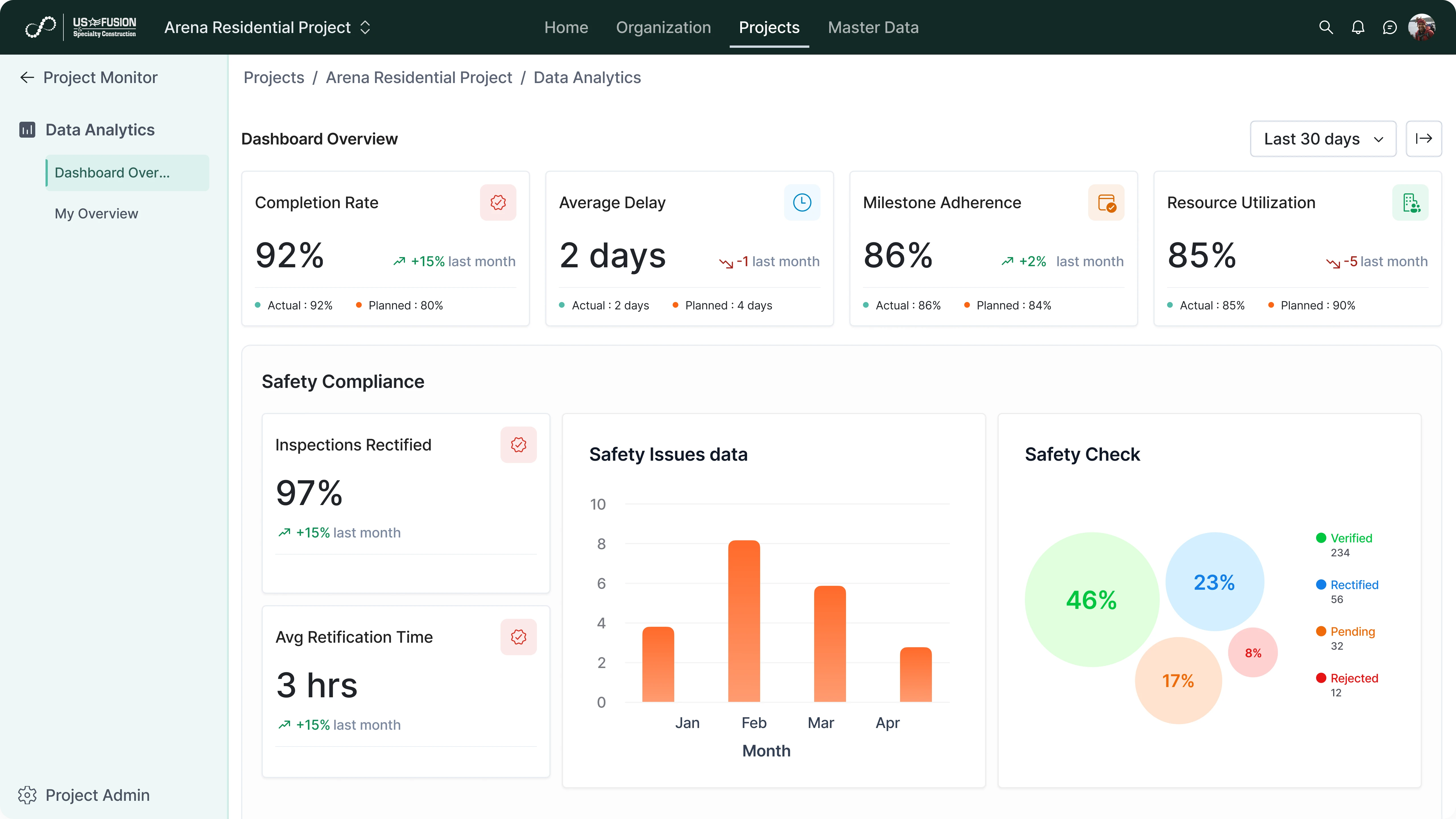
Track safety performance metrics
Monitor indicators such as incident counts and closure rates. This supports continuous improvement.
Maintain history of safety activities
Keep long-term records of safety actions and outcomes. This enables trend analysis and reporting.
Integration and Reporting
Connect safety data with field execution and analytics systems.
Link safety records with field works data
Associate safety observations with site activities and locations. This provides operational context.
Feed safety data into reports and dashboards
Use safety information for analytics and performance monitoring. This improves visibility for management.
Enable cross-module data consistency
Share safety records across related modules through connected services. This ensures a single source of truth.
Support proactive risk identification
Use consolidated safety data to identify recurring risks. This helps teams act before incidents occur.